Three Brothers and a Dream
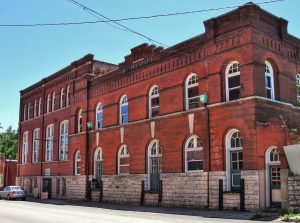
Life in mid-19th century Germany was rough. On the mend from a series of wars and a famine or 2, eking out a living was hard, even if you were willing to put in the work. Which was why for German immigrants, America was the promise of work actually paying off.

Three brothers were among the throngs of immigrants seeking a better life. Matthew, Jacob and John Dick were not brewers by trade and originally settled in the Belleville, IL area. As they looked for places to expand their trade business north on the Mississippi they came to Quincy, Illinois.

Boasting a large German immigrant population, Quincy was an industrious, growing city. The brothers decided it was the place to settle, as had many of their forefathers and friends. Together they se out to make a space for their small section of town to come together.
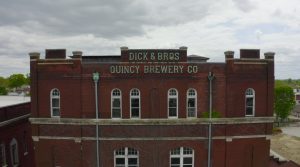
Sure, beer was the product, but it was about more than that. Dick Brothers Brewery encapsulated ambitious industry, the creation of community, and the American dream. It was about the work and the success that came after, the manifestation of one’s own destiny, if one wasn’t afraid to try.

As it grew, the brewery began to see shipments of over 70,000 barrels, at one point even eclipsing the production of the Anheuser-Busch beer empire in the 1880s.

Unfortunately, prohibition put a stop to production from 1920-1933 and the brewery was shuttered. But, judging from Quincy’s colorful past and as a city once known as “Little Chicago”, we are pretty sure a keg or two might have slipped out the back door during those years!

After prohibition ended in 1933 and a new federal taxing system was put in place for all malt liquors, the Dick Brothers family gave it another go. Unfortunately without the money to modernize their operations they lost a lot of market share to breweries in larger cities that could now ship more nationally. After a series of starts and stops the brewery was officially closed in 1949 and sold off in pieces at auction in 1951.
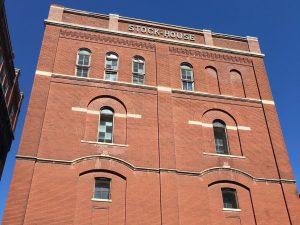
There have been a series of owners of the different buildings over the past 6 decades and various warehouse and service businesses called the buildings home. But in the mid-2010s, it became apparent that the buildings were falling further into neglectful disrepair until they were scooped up by Bret and Mark in 2015. They also have continued to buy more of the properties in the brewery complex and now own about 80% of the still standing buildings.

For them, this is about so much more than just beer. In restoring these historical spaces they’re keeping alive the brothers’ ingenuity and industrious spirit. The idea that no matter where you come from, you can try and make something of yourself through hard work is as true then as it is today; it’s in every brick the brothers laid, and every board Bret and Mark restore.

See the space for yourself in real life and book a private group Tunnel Tour.

Few places in Quincy capture the spirit of Adams County’s industrious roots and enduring community pride quite like the historic Dick Brothers Brewery. Established in 1857 by three German immigrant brothers—John, Jacob, and Matthew Dick—the brewery quickly rose to prominence, becoming one of the largest breweries in the Midwest. Its vast complex of Romanesque Revival brick buildings and underground cellars once symbolized a thriving industry deeply tied to the cultural heritage of the German District in Quincy.

Sure, beer was the product, but it was about more than that. Dick Brothers Brewery encapsulated ambitious industry, the creation of community, and the American dream. It was about the work and the success that came after, the manifestation of one’s own destiny, if one wasn’t afraid to try. Though Prohibition shuttered many breweries, Dick Brothers survived by pivoting to “near beer” and bottling water—an early testament to the resilience and ingenuity that continues to define the site today.

Fast forward to the 21st century, and a new chapter is being written by Bret and Joi Austin and Mark and Julie Krogman, a team of local owners driven not just to preserve history, but to bring it back to life. Their dream? To revitalize a vital corner of Quincy’s German District by breathing new life into old buildings, supporting small businesses and entrepreneurs, and creating spaces where people want to gather, celebrate, and belong.

Together, they have spearheaded a renaissance of the Dick Brothers complex, restoring its architectural grandeur while thoughtfully adapting it for modern use. Their first step was to reintroduce the public to the space by launching a special events venue business within the former Stock House—a cavernous brick building once used to store beer. This space now hosts weddings, fundraisers, cocktail hours, and private parties, transforming a dormant relic into a lively destination.

To deepen the public’s connection to the site’s heritage, the team opened the Museum Room, located inside the Stock House. This intimate gallery houses artifacts and memorabilia from Dick Brothers and other local breweries, offering an immersive look into Quincy’s brewing history.

Perhaps the most dramatic transformation came with the reopening of the underground tunnel system. Once used in the lagering process, these hand-dug caverns had long been closed to the public. The team cleaned and reopened them, now offering history and architecture tours that explore both the brewery’s operations and its deep ties to the neighborhood above.

The most recent and ambitious project has been the creation of The Ratskeller Bar, located in the building formerly known as the Wash House. The idea had lived in Bret Austin’s mind for years and was brought to life with the help of Joi’s cousin and hospitality consultant, Ed Simbol. A nod to German tradition, the term “ratskeller” comes from the German words Rat (council) and Keller (basement). Historically, it was a place where town leaders gathered post-deliberation—regardless of politics—to reconnect over drinks. True to this spirit, today’s Ratskeller is a warm and inviting space that brings people together with craft cocktails, wine, beer, and a welcoming atmosphere. It features table games, shuffleboard, and events like First Friday Live Music, drawing patrons from across the region.

What began as a restoration project has blossomed into a bustling microdistrict. The once-vacant buildings now house a marketing and communications agency, interior design firm, special events venue, museum, cocktail bar, cigar lounge, and a roofing company—a testament to the owners’ commitment to fostering entrepreneurship and reactivating long-dormant spaces.

In recent years, the team has expanded their vision beyond the walls of the brewery itself. By organizing public events like the now-iconic Rotary Oktoberfest each fall and the newer MayFest each spring, the Dick Brothers Brewery team has bookended the seasons with vibrant, family-friendly celebrations of Quincy’s German roots and community spirit.

The Dick Brothers Brewery’s story is no longer just one of the past—it’s a story of vision, resilience, and community impact. As Adams County celebrates 200 years, the revitalization of the brewery stands as a shining example of how honoring history can lay the foundation for a more connected and inspired future.

In the summer of 2025, the historic Dick Brothers Brewery Complex stepped into the spotlight as a featured filming location for the feature film Death of a Brewer. This cinematic project, rooted in the rich and often complicated history of brewing, the lead up to prohibition, and community, found its perfect backdrop in Quincy—and particularly within the walls and underground tunnels of our brewery.

From the original brick and stone cellars and aging caves to the architectural grandeur of our Dick Brothers Brewery Complex, the film crew captured scenes that reflect the very spirit of our heritage. Several other locations across Quincy also played a role, including the log cabins at Quinssippi Island and the Illinois Veterans Home, highlighting the city’s enduring charm and character.

We’re proud to have welcomed this creative project and excited for audiences everywhere to discover the history, mystery, and legacy of brewing—right here where it all happened.

Proof of Concept: Death of a Brewer